
Understanding Infertility After One Year of Trying
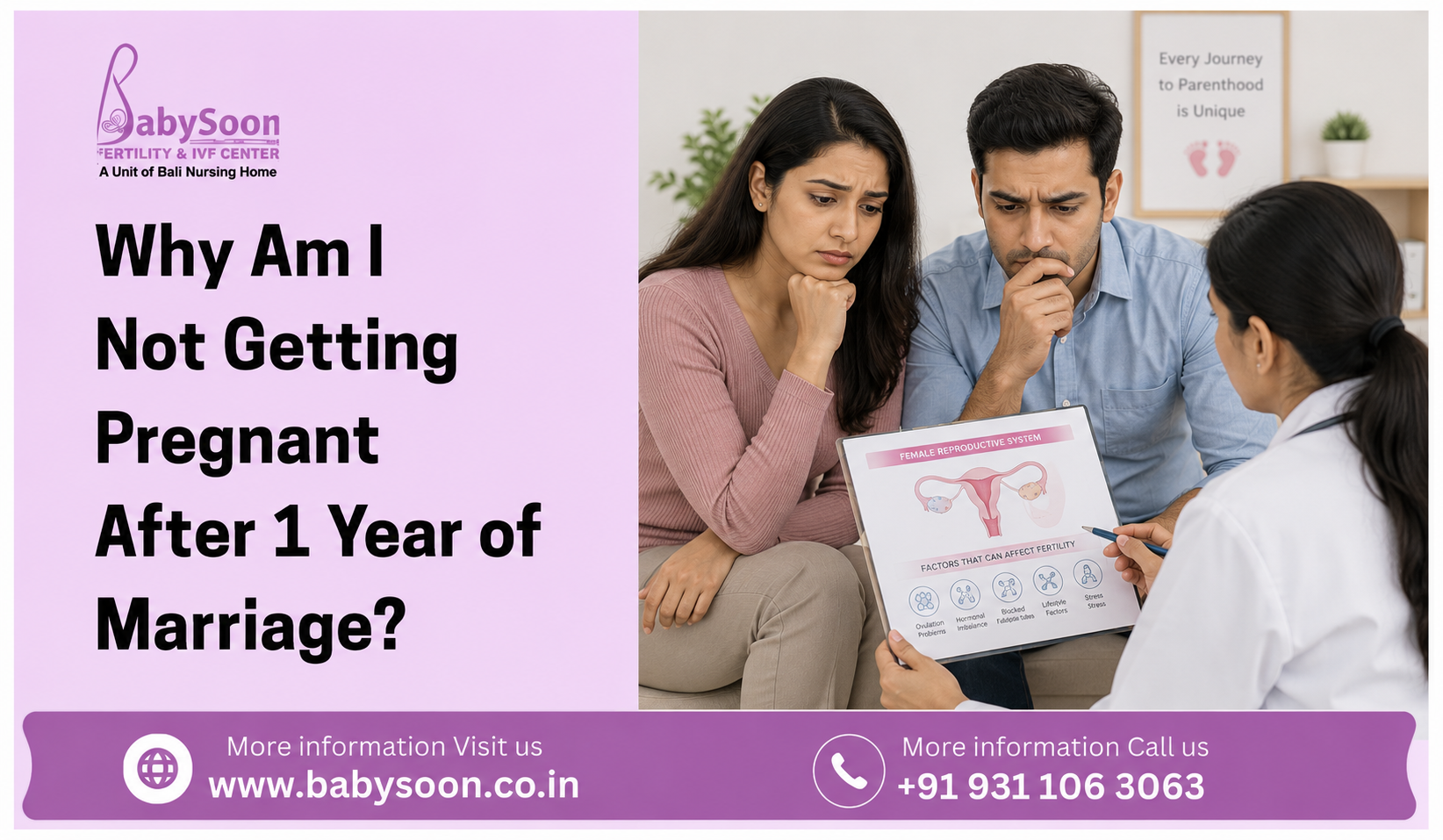
For many couples, marriage marks the beginning of a beautiful journey toward parenthood. However, when pregnancy does not happen despite regular unprotected intercourse, frustration, stress, and anxiety often begin to build. One of the most common questions fertility specialists hear is, “Why am I not getting pregnant after 1 year of marriage?”
According to fertility experts, if a couple has been trying to conceive naturally for one year without success, it may be time to seek a professional fertility evaluation. At BabySoon IVF Centre in Karol Bagh, Central Delhi, we help couples identify the root causes of infertility and provide personalised treatment solutions.
Is It Normal Not to Get Pregnant After One Year?
While some couples conceive within a few months, others may take longer. However, if you are under 35 years of age and have been trying for one year without pregnancy, a fertility assessment is recommended.
If the woman is over 35, fertility specialists generally advise seeking help after six months of trying.
The good news is that infertility does not always mean you cannot have a baby. Modern fertility treatment options can successfully address many underlying issues.
Common Reasons Why Pregnancy Is Not Happening
1. Ovulation Problems
Ovulation disorders are among the leading causes of female infertility.
Women with irregular periods may not release eggs consistently, reducing the chances of conception.
Common conditions include:
- PCOS
- Hormonal imbalances
- Thyroid disorders
- Premature ovarian insufficiency
2. Low Egg Reserve
A woman’s fertility naturally declines with age. Low ovarian reserve means fewer healthy eggs are available for fertilization.
Many women discover they have low AMH levels only after undergoing fertility testing.
3. Blocked Fallopian Tubes
The fallopian tubes play a vital role in natural conception. If they are blocked, sperm and egg cannot meet.
Common causes include:
- Pelvic infections
- Endometriosis
- Previous surgeries
- Tubal damage
4. Male Infertility Issues
Nearly 40% of infertility cases involve male factors.
Common male fertility problems include:
- Low sperm count
- Poor sperm motility
- Abnormal sperm morphology
- Varicocele
A semen analysis is often one of the first tests recommended by fertility specialists.
5. Endometriosis
Endometriosis occurs when tissue similar to the uterine lining grows outside the uterus.
This condition can affect:
- Ovulation
- Egg quality
- Implantation
- Fertility outcomes
6. Unexplained Infertility
In some cases, all fertility tests appear normal, yet pregnancy does not occur. This is known as unexplained infertility.
Advanced fertility treatments can often help such couples conceive successfully.
Lifestyle Factors Affecting Fertility
Modern lifestyle habits can significantly impact fertility.
Common fertility-reducing factors include:
- Smoking
- Alcohol consumption
- Obesity
- Poor diet
- Chronic stress
- Lack of sleep
Making positive lifestyle changes can improve reproductive health and increase pregnancy chances.
When Should You Visit a Fertility Specialist?
You should consider consulting a fertility specialist if:
- You have been trying for one year without success.
- You have irregular periods.
- You have experienced multiple miscarriages.
- You have known reproductive health conditions.
- Your partner has a history of male fertility issues.
Early diagnosis often leads to better treatment outcomes.
Fertility Tests Recommended for Couples
At BabySoon IVF Centre, fertility assessments may include:
For Women:
- AMH Test
- Hormone Testing
- Ultrasound Evaluation
- Ovulation Monitoring
For Men:
- Semen Analysis
- Hormonal Evaluation
- Advanced Sperm Testing
These tests help identify the exact cause of infertility and guide treatment planning.
Fertility Treatment Options Available
Depending on the diagnosis, treatment options may include:
- Ovulation Induction
- Lifestyle Modification
- IUI Treatment
- IVF Treatment
- ICSI Treatment
- Fertility Preservation
Every couple receives a customized treatment plan based on their unique fertility profile.
Why Couples Choose BabySoon IVF Centre in Karol Bagh
Couples from Central Delhi trust BabySoon IVF Centre because of:
- Experienced fertility specialists
- Personalized treatment plans
- Advanced fertility technology
- Ethical and transparent care
- High-quality fertility diagnostics
Our goal is to help couples move from uncertainty to successful parenthood.
If you are wondering why you are not getting pregnant after 1 year of marriage, the most important step is getting a professional fertility evaluation. Many fertility issues can be successfully treated when diagnosed early.
Book a consultation at BabySoon IVF Centre, Karol Bagh, and take the first step toward understanding your fertility and building your family.