
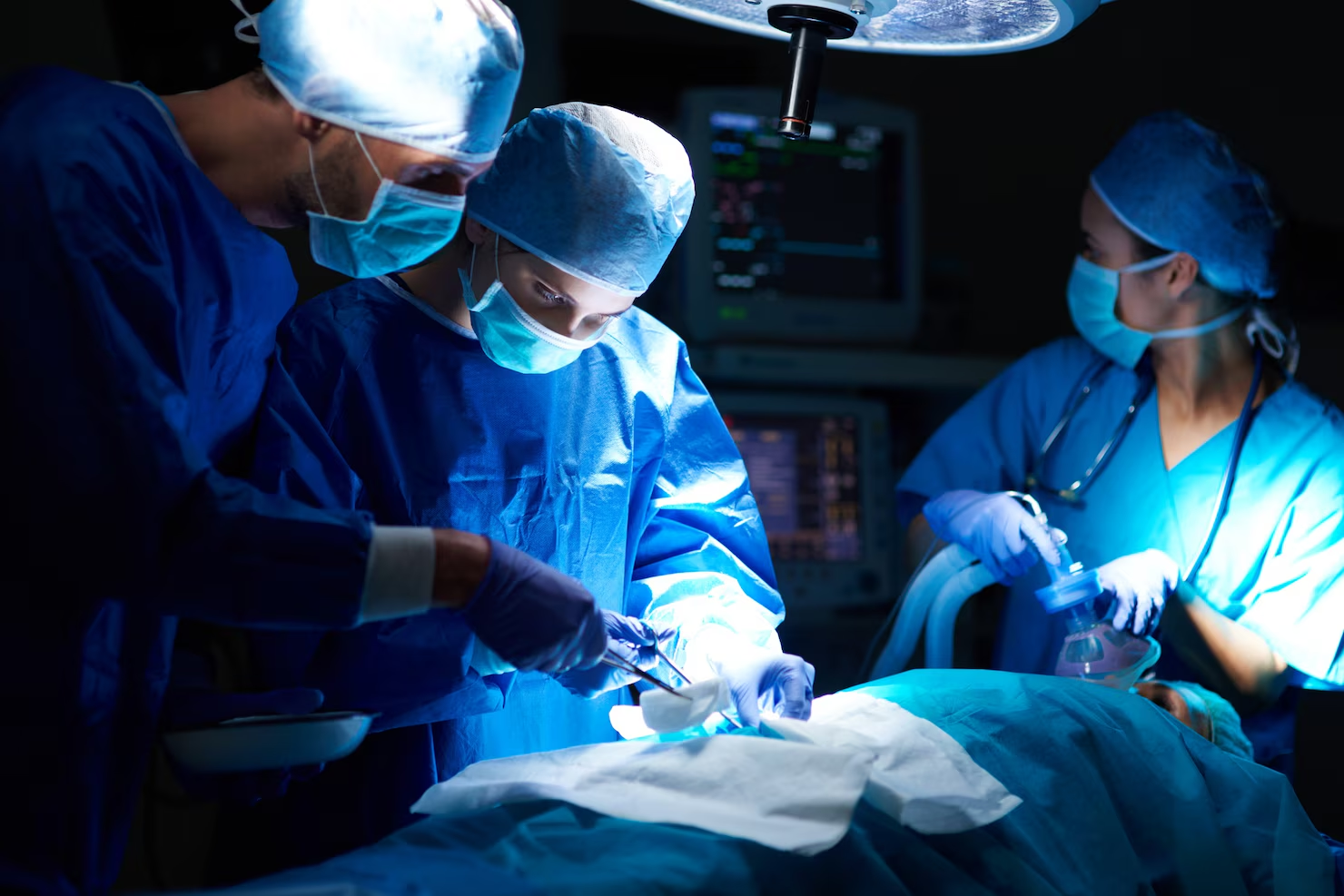
A laparoscopy is a surgical diagnostic technique used to inspect the uterus, ovaries, fallopian tubes, and other internal organs. It’s a minimally invasive technique that carries a low risk. The reason for undergoing the treatment of laparoscopy is to assess the reason for painful or heavy periods, pelvic pain (which may be caused by endometriosis or adhesions), pelvic masses (such as ovarian cysts), and fertility evaluation.
And, it is one of the frequent problems that women are facing these days, moreover, if you are looking for treatment for these problems then visit BabySoon, it is one of the best clinics for Laparoscopy Treatment Center in Delhi. We keep all of the equipment required to perform this treatment.In a nutshell, this is one of the most effective methods for determining the source of abdominal or pelvic pain.To do the same, we have a team of doctors and a complete setup of a lab for testing, evaluation, and diagnosis. With our laparoscopic treatment, we ensure the well-being of clients and give them the results they require.
BabySoon is one of Delhi’s best advanced laparoscopic treatment clinics.We are entitled
to deliver the exact results to our clients based on our illustrious years of
experience.Moreover, we provide proper guidance on every step and procedure under the
supervision of our specialists. Furthermore, we took all the necessary tests for the
evaluation and gave our clients the desired outcomes.
As a top fertility clinic in Delhi, we have helped thousands of men and women overcome reproductive challenges and severe infertility issues. Discover firsthand experiences from families who achieved their dreams.
Read More ReviewsI would start with saying a big THANK YOU to the entire team of BabySoon! I have been trying naturally for 2 years and because of the right treatment, advice & support of Dr. Jyoti Bali, I tested positive yesterday!!! Dr. Jyoti Bali is a stellar person and an Amazing Amazing Doctor. She was always transparent with me throughout my entire journey & made sure I was comfortable and taken care of. A special mention to Diljot for making sure I take my medicines on time!! Thank you so much again & all the best to the future mothers!!! HIGHLY RECOMMEND IT!!

Himani Nayal Thakur & Rohan Thakur
 Indian
I still remember coming here for the first time through Dr. Leena. It was a very new concept and experience for me, but as a doctor she was very supportive and gave me a lot of motivation + positive thinking. The treatment went very smoothly and by gods grace and her blessing I tested positive and delivered a cute Baby Girl on 6 June 2018. She has been a great motivator and mentor.
Aakriti Goel
Indian
It has been a year since we came to BabySoon and everytime we have been treated with the same love and care. It has been a miraculous journey where God blessed us with the best. All thanks to our amazing Doc Jyoti, she is blessed and god gifted. All the staff at BabySoon are so helpful and caring. As they say- One day you will see god had a purpose for all the waiting. Thanks to BabySoon for making our Dream come true.
Abhishika Balloch
Indian
Hello, my name is Hunny Khana. I came to BabySoon 1 year ago. We have suffered from infertility problems. Dr. Jytoti Bali suggested that this type of current situation happens to every 2-3 people. Jyoti Bali Madam, me and my wife are greatly thankful to you for a sweet baby.
Hunny Khanna
Indian
The approximate cost of laparoscopy treatment in Delhi is ₹30,000-₹80,000, depending on the reason for the procedure and whether any additional treatment is performed during surgery. Hospital charges, anaesthesia, investigations, and medications may also affect the overall cost.
Laparoscopy is a minimally invasive procedure in which a small camera is inserted through a tiny incision in the abdomen to view the reproductive organs directly. In infertility care, it is often used to check for endometriosis, adhesions, ovarian cysts, or problems affecting the fallopian tubes. It is recommended only when a doctor believes it will provide useful information or treatment.
In select patients, treating a problem found during laparoscopy can improve the odds of conceiving. Endometriosis and adhesions, for instance, are sometimes treated during the same procedure that diagnoses them. That said, laparoscopy does not benefit every patient’s fertility, so the potential gain must be weighed against the need for surgery itself.
Laparoscopy can identify where a blockage sits and, in some cases, treat it directly. Successfully reopening the tube depends on the severity and location of the blockage. When both tubes are severely damaged, IVF is generally considered as an alternative.
Laparoscopy is useful when endometriosis is suspected, or already diagnosed, particularly when symptoms or other findings suggest that surgery may be beneficial. Visible lesions or adhesions can sometimes be treated during the same procedure. The decision should be individualised, based on symptoms, age, and the patient’s fertility plans.
Diagnostic laparoscopy exists mainly to examine the reproductive organs for anything affecting fertility. Operative laparoscopy extends further, treating identified problems during the same procedure, cysts, adhesions, or endometriosis, depending on the case.
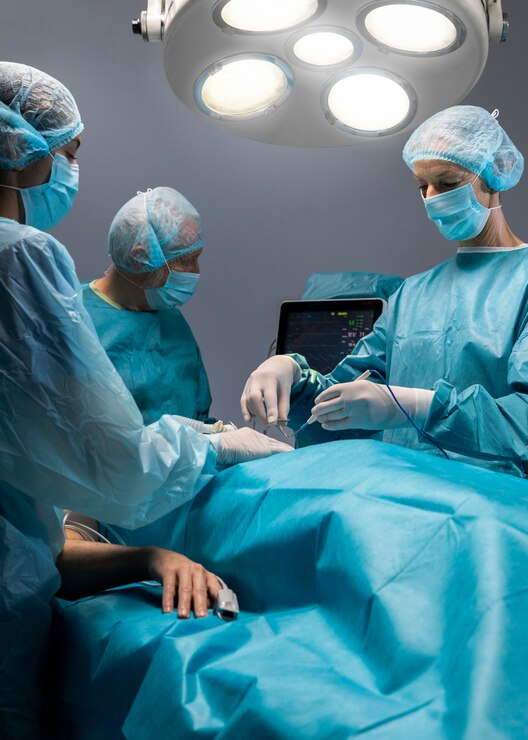
Laparoscopy is performed under general anaesthesia, so you remain asleep throughout the procedure. Some soreness around the incision sites is normal afterward, and temporary shoulder discomfort, a side effect of the gas used during surgery is common too. Pain medication is provided to keep recovery manageable.
Recovery time depends on whether the procedure was purely diagnostic or involved more extensive surgery. Many people return to light daily activities within a few days; full recovery, however, can take longer. Your surgeon will advise when exercise, work, and sexual activity are safe to resume.
Certain ovarian cysts and some fibroids can be treated laparoscopically when surgery is the appropriate route. Laparoscopy does not cure PMOS (PCOS) itself, although it may have a role in very specific situations. What is actually done depends on the type and severity of the problem, and on the individual’s fertility goals.
This depends on the type of procedure performed and how quickly recovery progresses. After a minor procedure, trying to conceive again may be possible fairly soon; more extensive surgery usually calls for a longer healing period. Your surgeon can provide a timeline suited to your specific case.

Wherever you are on your journey, one of our supportive nurse enquiry team members can help you understand your options and take the next step. These conversations are free and informative.