
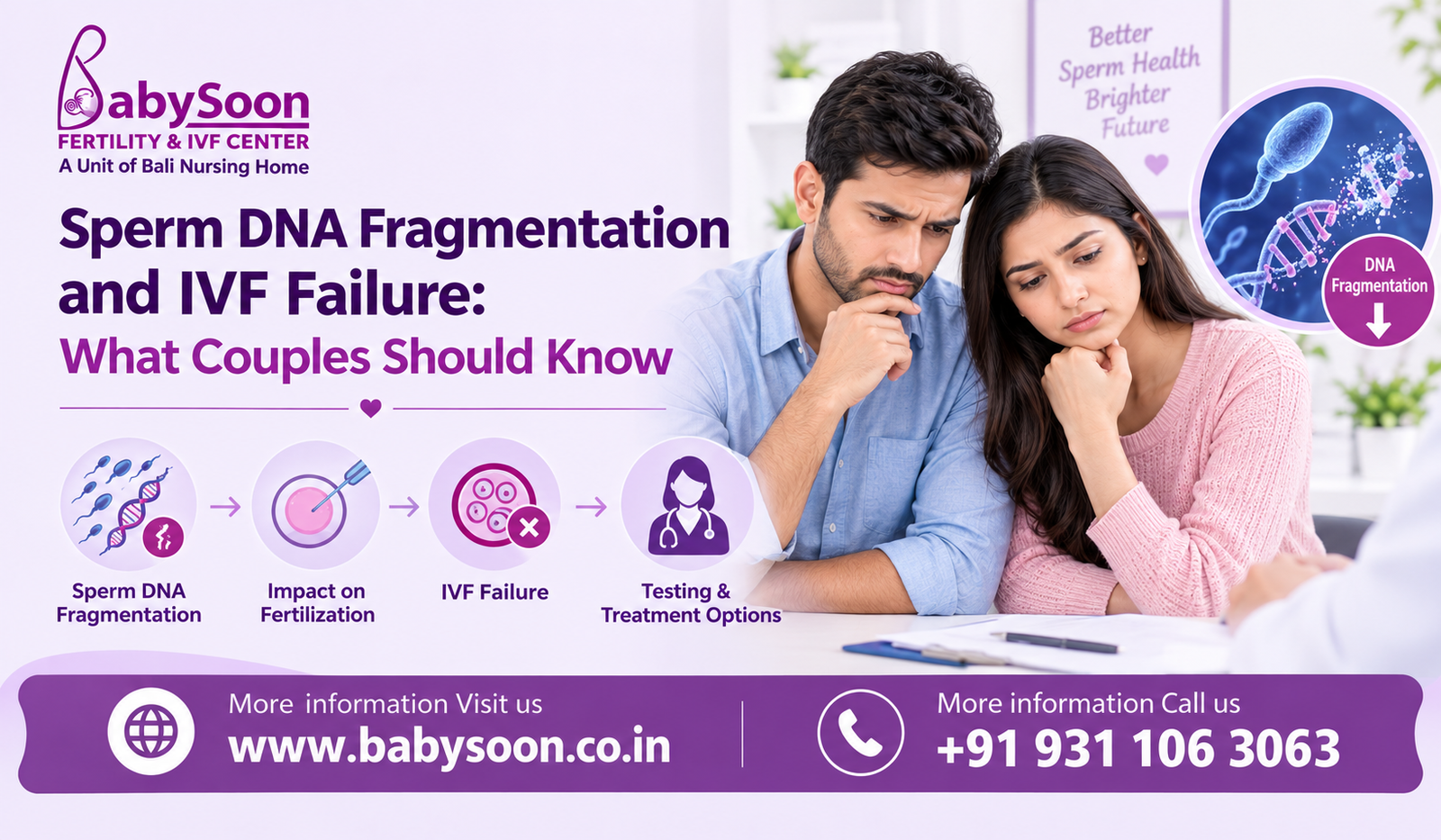
Sperm DNA Fragmentation and IVF Failure: What Couples Should Know
At BabySoon, we know that an unsuccessful IVF cycle can leave couples wondering what went wrong. There may be several possible reasons, and sometimes the answer is not immediately clear. Egg quality, embryo development, age, and uterine factors are commonly discussed, but sperm health can also be an important part of the picture. One area that may be considered in certain cases is sperm DNA fragmentation and IVF failure. Understanding sperm DNA quality can give fertility specialists additional information when reviewing previous IVF outcomes and planning the next step.
Let’s Understand About Sperm DNA Fragmentation
Sperm DNA fragmentation means there are breaks or damage in the DNA inside sperm cells. This DNA is passed straight to the embryo at fertilisation, so its quality matters during the early stages of development.
A standard semen analysis does not directly measure sperm DNA integrity. Instead, it usually looks at factors such as sperm count, movement, and shape. This means a person can sometimes have reasonably normal semen analysis results while still having a higher level of sperm DNA damage.
That does not mean pregnancy or IVF success is impossible. Sperm DNA fragmentation is just one factor a fertility specialist might find relevant when piecing together a couple’s reproductive history.
Can Sperm DNA Fragmentation Lead to IVF Failure
The connection between sperm DNA fragmentation and IVF failure is not straightforward. Studies have found associations between higher levels of sperm DNA damage and certain poorer reproductive outcomes, but this does not mean that DNA fragmentation is responsible for every unsuccessful IVF cycle.
IVF success depends on several things working together. The quality of the eggs and sperm, embryo development, age, the uterus and endometrium, and other medical or reproductive factors can all influence the result.
For this reason, a high DNA fragmentation result should not automatically be considered the reason an IVF cycle failed. Instead, it can be one piece of information that helps a fertility specialist decide whether further investigation or a change in treatment strategy is worth considering.
How Can Sperm DNA Damage Affect IVF
Sperm DNA plays a role in the genetic contribution made to the embryo. When DNA is damaged, it may potentially affect reproductive outcomes in some couples. Some possible concerns include:
- Fertilisation: Sperm quality can influence the chances of successful fertilisation.
- Embryo development: Sperm contributes genetic material to the developing embryo, and DNA damage may affect development in some circumstances.
- Implantation: Problems with embryo development can potentially affect its ability to implant.
- Pregnancy: Higher sperm DNA fragmentation has also been associated in some research with an increased risk of pregnancy loss.
The important point is that these effects are not the same for everyone. A test result needs to be interpreted alongside the couple’s complete fertility history.
What Can Cause Sperm DNA Fragmentation
There isn’t always one clear reason for sperm DNA damage. Several factors can affect sperm health and may contribute to DNA fragmentation.
| Possible Factors | How It May Affect Sperm |
| Oxidative stress | Can damage sperm cells and their DNA |
| Smoking and tobacco | May increase oxidative stress |
| Infections or inflammation | Can interfere with sperm health |
| Varicocele | May affect sperm production and quality |
| Excessive heat | Can negatively affect sperm production |
| Increasing age | May be associated with greater DNA damage |
| Certain lifestyle factors | Can influence overall sperm health |
Having one of these factors does not necessarily mean that a person will have high DNA fragmentation. Further assessment may be needed to understand what is actually contributing to the problem.
How Is Sperm DNA Fragmentation Tested
A sperm DNA fragmentation test is different from a routine semen analysis. Instead of mainly looking at the number, movement, and appearance of sperm, it assesses the integrity of the DNA inside sperm cells.
Different testing methods are available, and the way results are reported can vary between laboratories. A fertility specialist in delhi can explain what a particular result means and whether it is relevant to the couple’s treatment.
It is also important to understand that DNA fragmentation testing is not routinely required for every person undergoing an initial infertility evaluation. Testing is generally considered based on the individual’s circumstances and reproductive history.
When Should You Consider a DNA Fragmentation Test
Not everyone undergoing IVF needs sperm DNA fragmentation testing. Whether it is useful depends on the clinical situation.
A specialist may discuss additional sperm testing when there are particular concerns about male fertility or when a couple has experienced repeated reproductive difficulties. Recurrent pregnancy loss may also lead to a more detailed discussion about sperm DNA integrity in appropriate cases.
After one unsuccessful IVF cycle, it is usually better to look at the complete treatment cycle rather than immediately assuming sperm DNA fragmentation was responsible.
This is especially important because IVF failure can happen for many different reasons. Testing should ideally be recommended when the result is likely to provide information that can actually influence treatment decisions.
Can You Reduce Sperm DNA Fragmentation
In some situations, improving overall sperm health and addressing an underlying problem may help reduce sperm DNA damage. What is appropriate depends on the cause. A fertility specialist may suggest steps such as:
- Stopping smoking and tobacco use
- Maintaining a healthy weight
- Eating a balanced and nutritious diet
- Exercising regularly
- Avoiding unnecessary heat exposure around the testicular area
- Treating an infection or inflammation if one is identified
- Managing a condition such as varicocele when appropriate
- Reviewing medications or health conditions that may affect sperm
It is worth remembering that sperm production takes time. Changes in lifestyle or medical treatment will not necessarily produce immediate results. Supplements or a particular treatment should also not be considered a guaranteed solution for sperm DNA damage.
Does ICSI Help With Sperm DNA Fragmentation
Intracytoplasmic sperm injection, commonly called ICSI, is an IVF technique in which a selected sperm is injected directly into an egg. It is often considered when there are certain male-factor infertility concerns or previous fertilisation problems.
ICSI treatment in Delhi can overcome some difficulties related to sperm count, movement, or the ability of sperm to reach and fertilise the egg. However, it does not repair damaged DNA inside a sperm.
Therefore, sperm DNA fragmentation and IVF failure should not automatically lead to the conclusion that ICSI will solve the problem. Whether ICSI is appropriate depends on factors such as the semen analysis, previous IVF results, fertility history, and the overall assessment of both partners.
What If IVF Has Failed More Than Once
Experiencing repeated IVF failure can be frustrating, particularly when the reason is unclear. Instead of focusing on one possible cause, it can be helpful to review what happened during previous treatment cycles. Depending on the situation, a fertility specialist may look at:
- Fertilisation results
- Number and quality of embryos developed
- Sperm count, movement, and morphology
- Sperm DNA integrity, when appropriate
- Egg quantity and quality
- Uterine and endometrial factors
- Previous implantation and pregnancy outcomes
- Medical history and lifestyle factors
This broader approach can help prevent couples from assuming that one abnormal test or one unsuccessful cycle tells the whole story.
At BabySoon, discussions around IVF Centre in Delhi and ICSI can take into account the couple’s individual fertility history rather than treating every case in exactly the same way.
Looking Beyond the Semen Analysis
Sperm health involves more than just sperm count. DNA integrity can provide additional information in selected fertility cases, particularly when standard investigations do not fully explain reproductive difficulties.
Although sperm DNA fragmentation and IVF failure may be linked in some circumstances, it should not be treated as the sole explanation for an unsuccessful IVF cycle. A proper evaluation considers both male and female factors before deciding what to do next.
If you are undergoing IVF Treatment in Delhi and want to understand whether sperm quality could be affecting your treatment, BabySoon can help you discuss your fertility history and explore appropriate evaluation and treatment options. Speak with a BabySoon fertility specialist to understand the next step for your individual journey.