Can IVF Work With Only One Ovary?
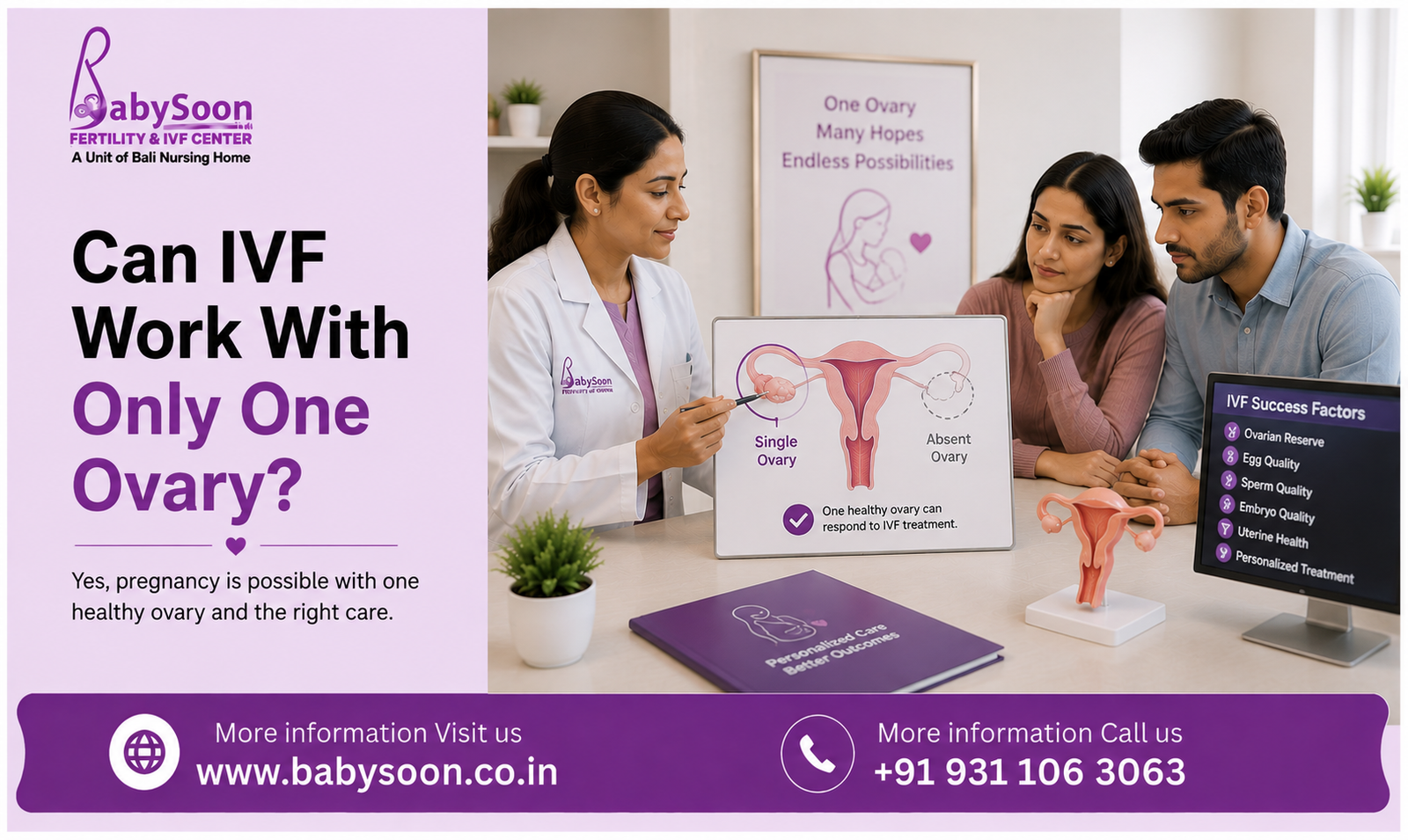
Yes, IVF can work with only one ovary, and many women with a single ovary have successfully conceived through IVF. Losing one ovary does not automatically mean you cannot become pregnant. In many cases, the remaining ovary continues to ovulate and produce healthy eggs, making pregnancy possible naturally or with fertility treatment.
If you’ve undergone ovary removal due to an ovarian cyst, endometriosis, ovarian torsion, or another medical condition, it’s natural to wonder about your chances of becoming a parent. The good news is that IVF can still be an effective option, especially when treatment is tailored to your individual fertility profile.
Can You Get Pregnant Naturally With One Ovary?
Yes. Many women with one healthy ovary conceive naturally because the remaining ovary usually compensates by releasing an egg each month. Fertility depends more on the health of the remaining ovary, egg quality, age, and overall reproductive health than on the number of ovaries.
However, if there are additional fertility concerns—such as blocked fallopian tubes, male infertility, or reduced ovarian reserve—IVF may offer the best chance of pregnancy.
Does Having One Ovary Affect IVF Success?
Not necessarily.
Women with one ovary may produce fewer eggs during ovarian stimulation than women with two ovaries. However, IVF success with one ovary depends more on the quality of the eggs than the quantity.
Several factors influence IVF outcomes, including:
- Age of the woman
- Ovarian reserve (AMH levels and Antral Follicle Count)
- Egg quality
- Sperm quality
- Uterine health
- Embryo quality
Many women with one ovary achieve successful pregnancies, especially when the remaining ovary functions well.
When Is IVF Recommended for Women With One Ovary?
Your fertility specialist may recommend IVF with one ovary if you have:
- Blocked or damaged fallopian tubes
- Endometriosis
- Low ovarian reserve
- Male factor infertility
- Unexplained infertility
- Previous unsuccessful fertility treatments
IVF helps by retrieving eggs directly from the functioning ovary, fertilising them in the laboratory, and transferring a healthy embryo into the uterus.
Challenges of IVF With One Ovary
While IVF is possible, there may be some challenges:
Fewer Eggs Retrieved
Because only one ovary is stimulated, the number of eggs collected may be lower. However, even a small number of high-quality eggs can result in a successful pregnancy.
Lower Ovarian Reserve
If the remaining ovary has a reduced egg reserve, your doctor may adjust the stimulation protocol to maximize egg development.
Individual Response to Medication
Every woman responds differently to fertility medications. Regular ultrasound scans and hormone monitoring help your fertility specialist optimize treatment throughout the cycle.
How Can You Improve IVF Success With One Ovary?
Although you cannot increase the number of ovaries, you can improve your overall reproductive health by:
- Maintaining a healthy weight
- Eating a balanced, nutrient-rich diet
- Avoiding smoking and excessive alcohol
- Managing stress
- Taking prescribed fertility supplements if recommended
- Following your fertility specialist’s treatment plan
Personalized IVF protocols can significantly improve outcomes for women with one ovary.
What Tests Are Recommended Before IVF?
Before starting treatment, your fertility specialist may recommend:
- AMH (Anti-Müllerian Hormone) test
- Antral Follicle Count (AFC) scan
- Hormone profile
- Pelvic ultrasound
- Semen analysis
- Uterine cavity evaluation, if needed
These tests help determine the most suitable IVF protocol and estimate the expected ovarian response.
When Should You See a Fertility Specialist?
Consult a fertility specialist if:
- You’ve been trying to conceive for 12 months (or 6 months if you’re over 35)
- You have only one ovary and are planning pregnancy
- You’ve had previous ovarian surgery
- You have endometriosis, PCOS, or irregular ovulation
- You’ve experienced recurrent pregnancy loss or failed fertility treatments
Early evaluation can help identify potential challenges and improve treatment outcomes.
How BabySoon Can Help
At BabySoon, we understand that every fertility journey is different. Women with one ovary often worry that pregnancy may not be possible, but many go on to have successful IVF pregnancies with the right medical guidance.
Our fertility specialists create personalised treatment plans based on your ovarian reserve, hormone levels, age, and overall reproductive health. Using advanced IVF techniques and evidence-based care, we focus on maximising your chances of achieving a healthy pregnancy.
Frequently Asked Questions
Can IVF work with only one ovary?
Yes. Many women with one healthy ovary successfully conceive through IVF. The success of treatment depends more on egg quality, ovarian reserve, and overall reproductive health than the number of ovaries.
Can one ovary produce enough eggs for IVF?
Yes. Although fewer eggs may be retrieved, high-quality eggs from one ovary can still lead to healthy embryos and a successful pregnancy.
Does removing one ovary reduce fertility?
It may reduce the number of eggs available, but many women retain normal fertility if the remaining ovary is healthy and functioning well.
Is IVF success lower with one ovary?
Not always. Studies suggest that while women with one ovary may have a lower egg yield, pregnancy and live birth rates can be comparable to women with two ovaries when good-quality embryos are available.
Having one ovary does not mean giving up on your dream of parenthood. IVF with one ovary has helped many women achieve successful pregnancies, particularly when treatment is tailored to their unique fertility profile. A thorough fertility evaluation, personalised stimulation protocol, and expert guidance can make a significant difference.
If you’re planning pregnancy or have concerns about fertility after ovary removal, consult the specialists at BabySoon to understand your options and create a treatment plan designed for your individual needs.