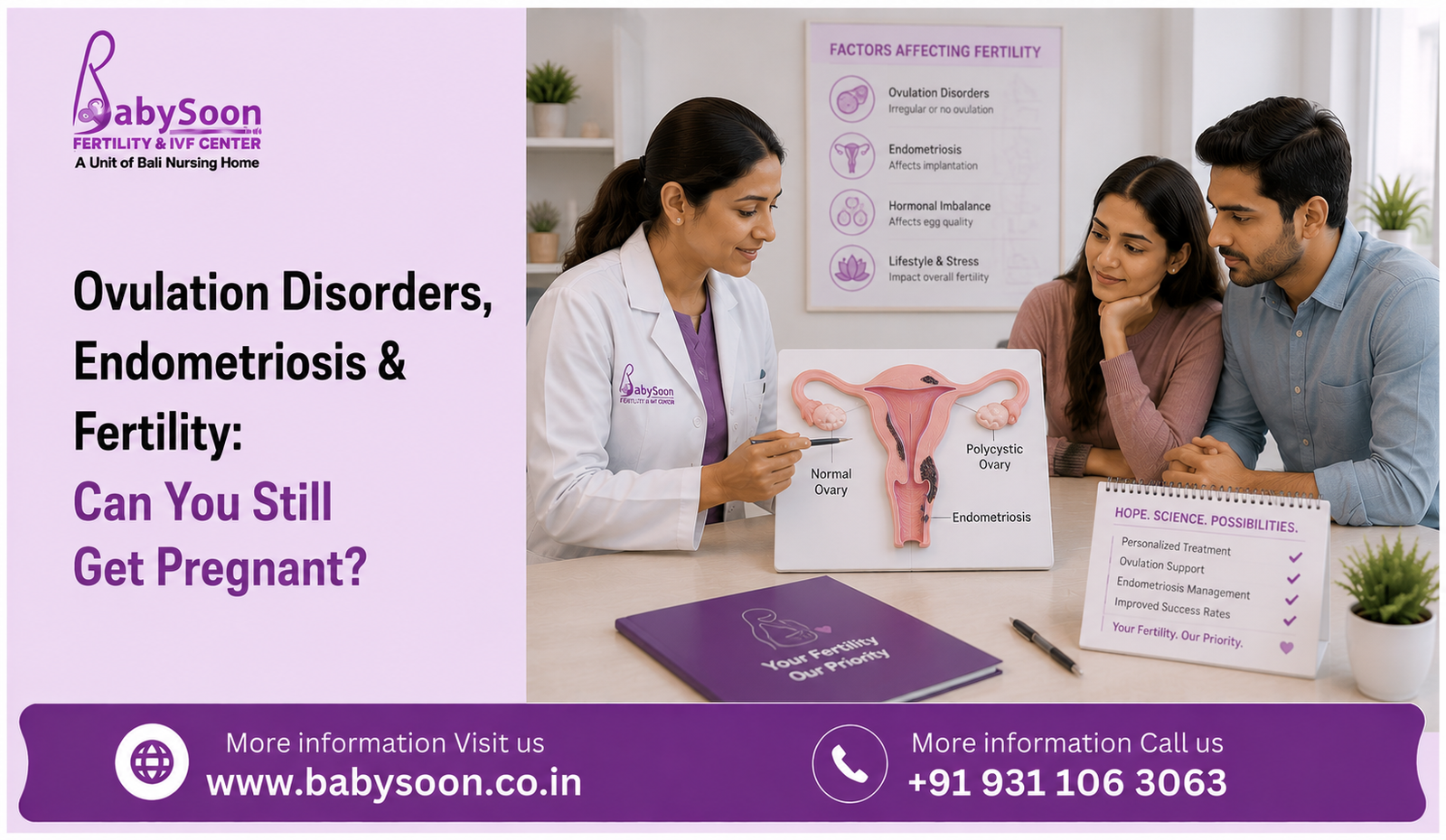
Ovulation Disorders, Endometriosis & Fertility: Can You Still Get Pregnant?
Difficulty conceiving can be emotionally challenging, especially when the cause isn’t immediately clear. Among the most common causes of female infertility are ovulation disorders and endometriosis. These conditions affect millions of women worldwide and can make it more difficult to become pregnant naturally.
The good news is that having an ovulation disorder or endometriosis does not mean pregnancy is impossible. With timely diagnosis, appropriate treatment, and personalised fertility care, many women successfully conceive naturally or with fertility treatments such as IVF.
In this guide, we’ll explain how these conditions affect fertility, available treatment options, and when it’s time to consult a fertility specialist.
What Are Ovulation Disorders?
Ovulation is the process in which one of the ovaries releases a mature egg each month. If ovulation doesn’t occur regularly—or doesn’t occur at all—it is known as an ovulation disorder.
Since pregnancy depends on the release of a healthy egg, irregular or absent ovulation is one of the leading causes of female infertility.
Common ovulation disorders include:
- Polycystic Ovary Syndrome (PCOS)
- Hypothalamic dysfunction
- Premature ovarian insufficiency
- Thyroid disorders
- High prolactin levels
Symptoms of Ovulation Disorders
Many women don’t realise they have an ovulation problem until they struggle to conceive.
Common symptoms include:
- Irregular menstrual cycles
- Missed periods
- Very light or very heavy periods
- Difficulty becoming pregnant
- Hormonal acne
- Excess facial or body hair (often associated with PCOS)
- Unexplained weight changes
If you experience these symptoms, a fertility evaluation can help determine whether ovulation is occurring normally.
How Ovulation Disorders Affect Fertility
Without regular ovulation, there is no egg available for fertilisation, making conception difficult.
Even when ovulation occurs occasionally, unpredictable cycles can make it challenging to identify the fertile window. Hormonal imbalances associated with ovulation disorders may also affect egg quality and the uterine environment, reducing the likelihood of pregnancy.
Fortunately, many ovulation disorders respond well to medical treatment and lifestyle changes.
What Is Endometriosis?
Endometriosis is a condition in which tissue similar to the lining of the uterus grows outside the uterus. These growths commonly affect the ovaries, fallopian tubes, and pelvic lining.
The condition can cause inflammation, pain, scar tissue, and adhesions, all of which may interfere with fertility.
While some women experience severe symptoms, others may have endometriosis without realising it until they begin trying to conceive.
Can Endometriosis Affect Pregnancy?
Yes. Endometriosis and pregnancy are closely linked because the condition can reduce fertility in several ways.
Endometriosis may:
- Damage the fallopian tubes
- Affect egg quality
- Reduce ovarian reserve
- Cause inflammation that interferes with fertilisation
- Make embryo implantation more difficult
However, many women with mild or moderate endometriosis conceive naturally, while others may benefit from fertility treatments.
Can You Get Pregnant Naturally?
Yes. Pregnancy is possible with both ovulation disorders and endometriosis, depending on the severity of the condition and other fertility factors.
Natural conception is more likely when:
- Ovulation is regular or can be medically induced.
- Endometriosis is mild.
- Fallopian tubes remain open.
- Egg and sperm quality are healthy.
- The female partner is younger and has a good ovarian reserve.
If pregnancy does not occur after several months of trying, fertility evaluation should not be delayed.
When Is IVF Recommended?
IVF may be recommended when other treatments have not been successful or when fertility is significantly affected.
Your fertility specialist may suggest IVF if you have:
- Severe endometriosis
- Blocked fallopian tubes
- Reduced ovarian reserve
- Persistent ovulation disorders
- Male factor infertility
- Multiple unsuccessful fertility treatments
IVF bypasses several barriers to conception by fertilising eggs in the laboratory and transferring a healthy embryo into the uterus.
How Are These Conditions Diagnosed?
A fertility specialist may recommend several tests, including:
- Hormone profile
- AMH (Anti-Müllerian Hormone) test
- Ultrasound scan
- Ovulation monitoring
- Pelvic examination
- Hysteroscopy (when indicated)
- Laparoscopy for suspected endometriosis in selected cases
- Semen analysis for the male partner
A complete evaluation of both partners helps identify the most appropriate treatment plan.
Treatment Options
Treatment depends on the underlying diagnosis and your reproductive goals.
For ovulation disorders, treatment may include:
- Lifestyle modifications
- Ovulation-inducing medications
- Hormonal management
- Monitoring ovulation
For endometriosis, treatment may include:
- Pain management
- Hormonal therapy (when pregnancy is not immediately planned)
- Surgical treatment in selected cases
- Fertility treatments such as IUI or IVF when appropriate
The right treatment is highly individualised and should be based on a thorough medical evaluation.
When Should You See a Fertility Specialist?
Consult a fertility specialist if:
- You are under 35 and have been trying to conceive for 12 months without success.
- You are 35 or older and have been trying for 6 months.
- Your periods are irregular or absent.
- You experience severe menstrual pain.
- You have been diagnosed with endometriosis.
- You have had previous miscarriages or unsuccessful fertility treatments.
Early evaluation often leads to earlier diagnosis and more effective treatment.
How BabySoon Can Help
At BabySoon, we understand that every fertility journey is unique. Our experienced fertility specialists provide comprehensive evaluations for women with ovulation disorders and endometriosis, helping identify the underlying cause of infertility and recommending personalised treatment options.
Whether you are trying to conceive naturally or considering IVF, our goal is to provide compassionate, evidence-based care tailored to your individual needs.
Frequently Asked Questions
Can ovulation disorders be treated?
Yes. Many ovulation disorders can be effectively managed with lifestyle changes, medications, or fertility treatments, depending on the underlying cause.
Can you get pregnant with endometriosis?
Yes. Many women with endometriosis conceive naturally, while others may require fertility treatments such as ovulation induction, IUI, or IVF.
Does everyone with endometriosis need IVF?
No. IVF is recommended only when appropriate, based on factors such as age, severity of endometriosis, ovarian reserve, and previous treatment outcomes.
Can ovulation disorders and endometriosis occur together?
Yes. Some women may have both conditions, making a comprehensive fertility evaluation essential to develop the most effective treatment plan.
Ovulation disorders and endometriosis are among the leading causes of female infertility, but they do not mean that pregnancy is impossible. Early diagnosis, timely treatment, and personalised fertility care can significantly improve your chances of conception.
Whether you’re experiencing irregular ovulation, have been diagnosed with endometriosis, or have been trying to conceive without success, seeking expert guidance is an important first step. At BabySoon, our fertility specialists are committed to helping you understand your options and supporting you throughout your journey toward parenthood.