Why Did My IVF Fail Even With Good Embryos?
One of the most difficult moments during fertility treatment is hearing that your embryo was of good quality, yet the IVF cycle was unsuccessful. If you’re wondering, “Why did my IVF fail even with good embryos?”, you’re not alone. Many couples experience this situation and seek answers before deciding on their next steps.
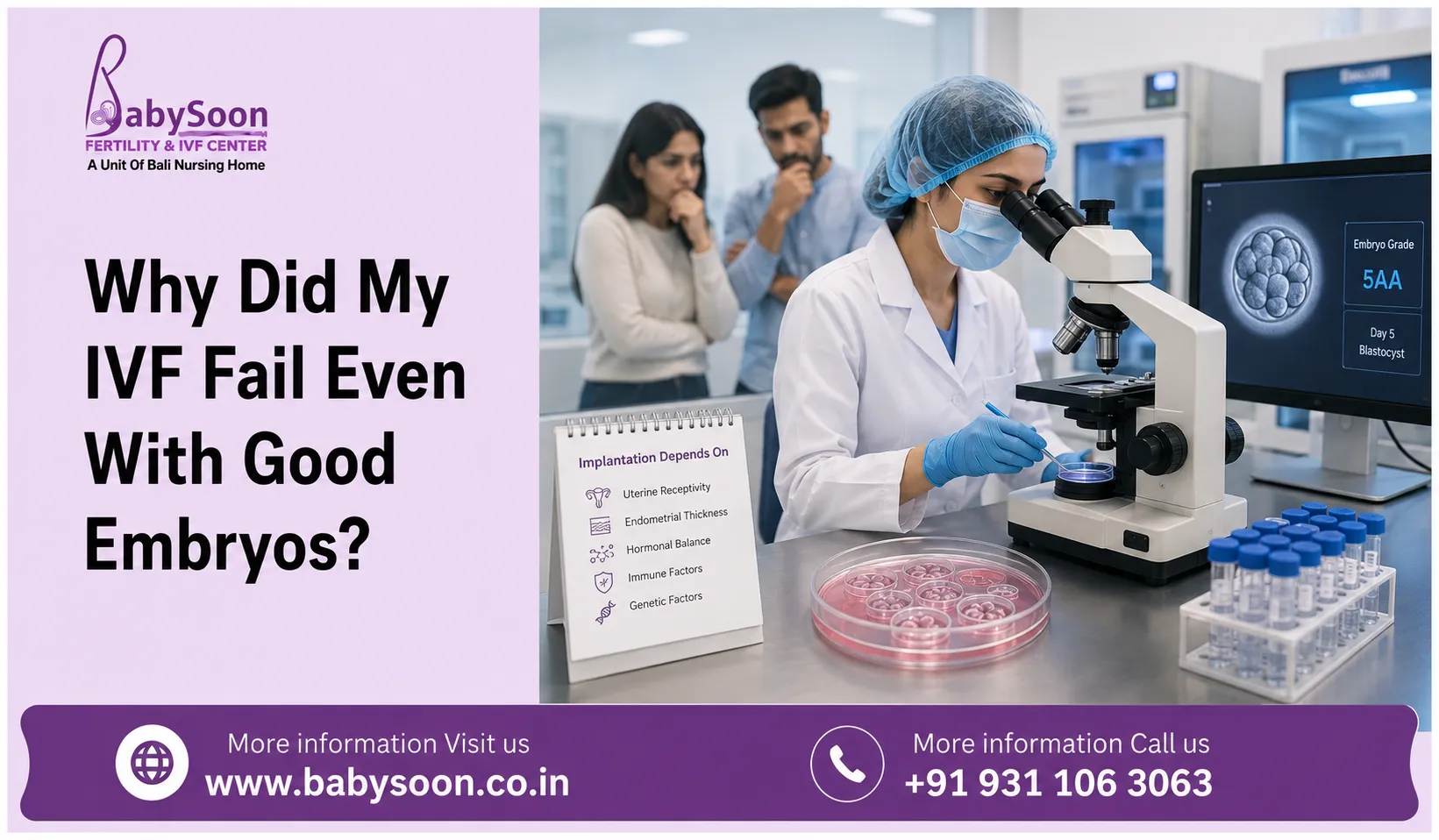
The good news is that a failed IVF cycle does not mean you cannot achieve pregnancy. Implantation depends on several factors beyond embryo quality. Understanding the possible reasons can help your fertility specialist create a more personalised treatment plan and improve your chances of success in future IVF cycles.
Can IVF Fail Even With Good-Quality Embryos?
Yes. A good-quality embryo has a better chance of implanting, but it does not guarantee pregnancy.
Embryo grading is based on how the embryo looks under a microscope. It does not always reveal whether the embryo is genetically normal or whether the uterus is fully prepared for implantation.
Successful IVF requires the right combination of:
- Healthy embryo
- Receptive uterine lining
- Balanced hormones
- Good sperm quality
- Proper embryo transfer timing
If any of these factors are affected, IVF can fail even with good embryos.
Common Reasons Why IVF Failed With Good Embryos
1. Chromosomal Abnormalities
An embryo may appear healthy but still have genetic abnormalities that prevent implantation or lead to an early miscarriage. This is more common as maternal age increases.
In some cases, your fertility specialist may recommend Preimplantation Genetic Testing (PGT) to identify chromosomally normal embryos before transfer.
2. Implantation Failure
One of the most common causes of IVF failure with good embryos is implantation failure. Even when a healthy embryo is transferred, it must successfully attach to the uterine lining.
Factors affecting implantation include:
- Endometrial receptivity
- Hormonal balance
- Timing of embryo transfer
- Blood flow to the uterus
3. Problems with the Uterine Lining
A healthy uterine lining is essential for embryo implantation. If the lining is too thin or affected by conditions such as polyps, fibroids, adhesions, or chronic inflammation, implantation may not occur.
Your fertility doctor may recommend additional tests like hysteroscopy to evaluate the uterus before another IVF cycle.
4. Hormonal Imbalances
Hormones play a vital role in preparing the uterus for pregnancy. Low progesterone levels, thyroid disorders, elevated prolactin, or uncontrolled PCOS can reduce the chances of successful implantation.
Correcting these issues before the next cycle may improve IVF success.
5. Male Factor Infertility
Even when embryos appear healthy, sperm quality can influence embryo development. Advanced sperm problems, such as DNA fragmentation, may affect implantation despite normal semen analysis results.
A comprehensive male fertility evaluation can help identify hidden issues.
6. Lifestyle Factors
Lifestyle choices can significantly impact IVF outcomes.
Factors that may reduce implantation success include:
- Smoking
- Excessive alcohol consumption
- Obesity
- Poor sleep
- Chronic stress
- Uncontrolled diabetes
Improving overall health before treatment can positively influence fertility.
7. Unexplained Factors
Sometimes, despite thorough testing, no clear reason is found. This is known as unexplained implantation failure. While frustrating, many couples achieve pregnancy after adjusting their treatment protocol or seeking a second opinion.
What Should You Do After a Failed IVF Cycle?
If your IVF failed with good embryos, don’t lose hope. Instead of repeating the same treatment, work with an experienced fertility specialist to understand what may have contributed to the outcome.
Your doctor may recommend:
- Reviewing embryo quality and laboratory reports
- Assessing uterine health
- Hormonal evaluation
- Additional fertility investigations
- Lifestyle modifications
- Genetic testing, if appropriate
- A personalised IVF treatment plan
Can You Get Pregnant After IVF Failed With Good Embryos?
Absolutely. Many couples who experience repeated IVF failure eventually conceive with the right diagnosis and treatment adjustments.
Success depends on several factors, including age, egg quality, sperm health, uterine conditions, and individualised care. With advances in fertility treatments and personalised protocols, many patients go on to have successful pregnancies after one or more failed IVF attempts.
How BabySoon Can Help
At BabySoon, we understand that every fertility journey is unique. If you’ve experienced IVF failure with good embryos, our fertility specialists focus on identifying the underlying cause rather than simply repeating the same protocol.
Our comprehensive approach includes advanced fertility evaluations, personalised treatment planning, and compassionate care to help maximise your chances of a successful pregnancy.
If you’re looking for answers after a failed IVF cycle, our team is here to guide you every step of the way.
Frequently Asked Questions
Why did my IVF fail even with good embryos?
A good-quality embryo alone does not guarantee pregnancy. Factors such as uterine health, hormonal balance, embryo genetics, sperm quality, and implantation timing all influence IVF success.
Can I get pregnant after a failed IVF cycle?
Yes. Many couples achieve pregnancy in later IVF cycles after identifying and addressing the underlying cause of the previous failure.
Should I change my fertility clinic after repeated IVF failure?
If you’ve experienced repeated unsuccessful IVF cycles, seeking a second opinion can help identify overlooked factors and provide a fresh treatment approach.
Does embryo quality guarantee IVF success?
No. Embryo quality is important, but successful implantation also depends on the health of the uterus, hormone levels, and several other medical factors.
Experiencing IVF failure with good embryos can be emotionally overwhelming, but it doesn’t mean your journey to parenthood has ended. Understanding the reasons behind implantation failure is the first step toward improving your chances in future IVF cycles.
With the right evaluation, personalised treatment, and expert guidance, many couples who have experienced failed IVF go on to achieve healthy pregnancies. If you’re looking for answers or considering a second opinion, consult the fertility specialists at BabySoon to create a treatment plan tailored to your unique needs.