ICSI Treatment in Delhi: Cost, Process, Success Rate & Eligibility Explained
For couples facing difficulty conceiving, choosing the right fertility treatment can feel overwhelming. ICSI is one of the advanced techniques used along with IVF, particularly when sperm-related factors make fertilization difficult. If you are considering ICSI treatment in Delhi, understanding its cost, process, eligibility and possible success rate can help you make a more informed decision. At BabySoon Fertility and IVF Centre, treatment plans are designed according to the individual fertility needs of each couple, with guidance from fertility specialists and embryology experts.
What Is ICSI Treatment
Intracytoplasmic Sperm Injection (ICSI) is an advanced form of assisted reproductive treatment. Unlike conventional IVF, where eggs and sperm are placed together in a laboratory dish for fertilization, ICSI involves injecting a single selected sperm directly into a mature egg.
The fertilized egg can then develop into an embryo, which may subsequently be transferred into the uterus as part of the IVF treatment cycle.
ICSI is particularly useful when fertilization may be difficult because of male-factor infertility or previous fertilization problems.
Who May Need ICSI
ICSI is not automatically required for every IVF patient. A fertility specialist generally recommends it after evaluating both partners and understanding the underlying cause of infertility. ICSI may be considered in cases such as:
- Very low sperm count
- Poor sperm motility
- Abnormal sperm morphology
- Previous IVF cycle with poor or failed fertilization
- Use of surgically retrieved sperm
- Certain male-factor infertility conditions
- Fertility treatment involving specific sperm-related concerns
The decision should be based on a proper fertility assessment rather than choosing ICSI simply because it is an advanced procedure.
Step-By-Step ICSI Treatment Process
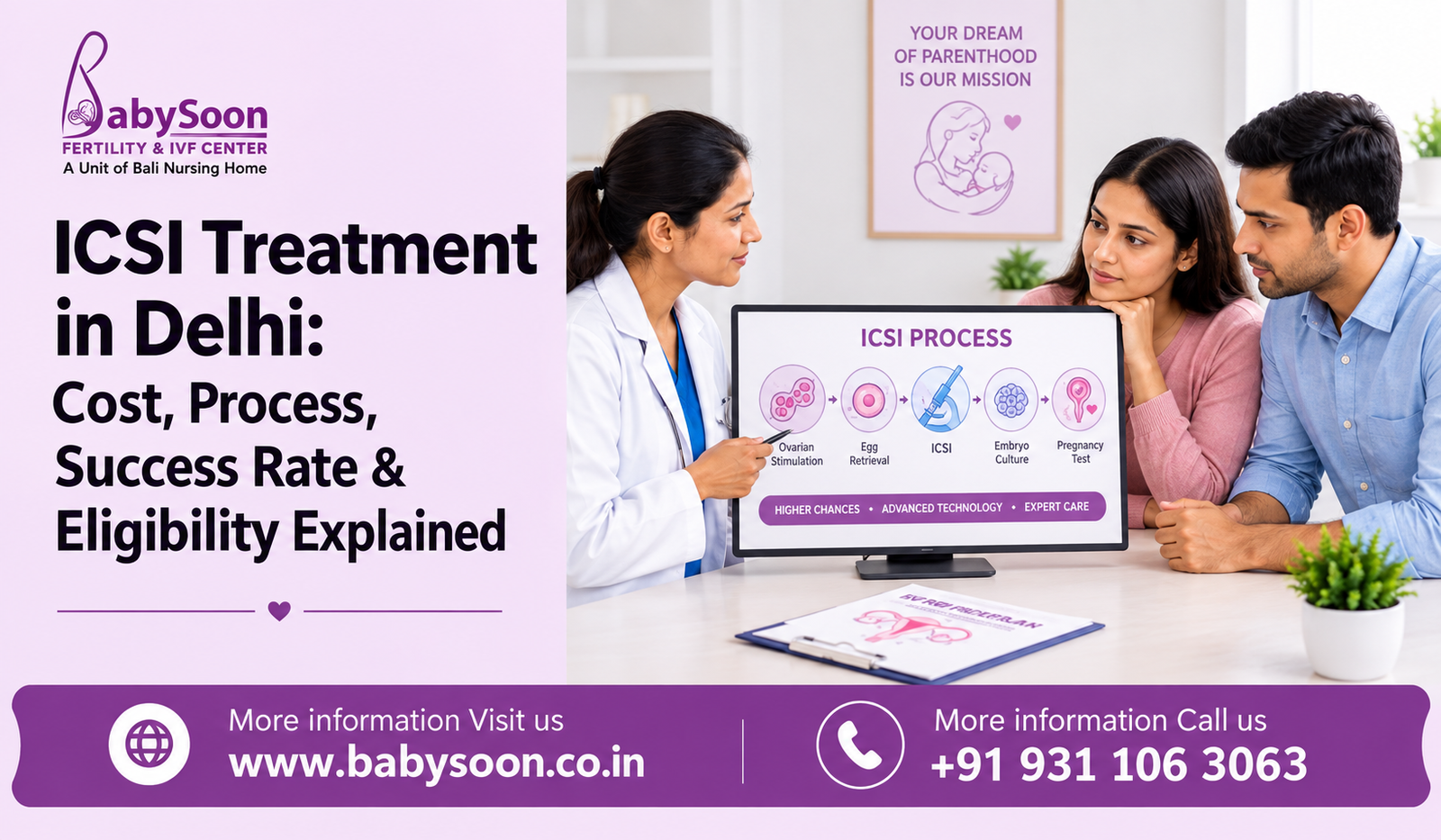
The ICSI treatment in Delhi generally follows several stages. Since ICSI is usually performed as part of an IVF cycle, patients undergo ovarian stimulation and egg retrieval before the actual sperm injection procedure.
1. Fertility Assessment
The process begins with an evaluation of both partners. Medical history, previous fertility treatments and relevant tests help the fertility specialist determine the most suitable treatment approach.
2. Ovarian Stimulation
The woman may receive prescribed hormonal medications to stimulate the ovaries and encourage the development of multiple follicles. Ultrasound monitoring helps the medical team track follicular growth and determine the appropriate time for egg retrieval.
3. Egg Retrieval
Once the follicles reach the required stage, a trigger injection may be administered. Egg retrieval is generally performed approximately 34-36 hours later.
4. Sperm Collection
A sperm sample is collected and assessed in the laboratory. Depending on the circumstances, sperm may also be retrieved through a suitable medical procedure.
5. Sperm Injection
This is the key stage of ICSI. An embryologist selects an appropriate sperm and injects it directly into a mature egg using specialized laboratory equipment.
6. Embryo Development
Following fertilization, the embryos are monitored in the embryology laboratory. The developing embryos are assessed before the fertility team decides on the next step.
7. Embryo Transfer
A suitable embryo may be transferred into the uterus when the endometrium is considered receptive. Depending on the treatment plan, embryos may also be frozen for future use.
8. Pregnancy Test
A beta-hCG blood test is generally performed around 12-14 days after embryo transfer to determine whether pregnancy has occurred.
ICSI Treatment Cost in Delhi
One of the most important questions for couples is the ICSI treatment cost in Delhi. The final amount varies because every fertility treatment plan is different.
According to BabySoon, a complete ICSI cycle in Delhi can cost approximately ₹1,50,000 to ₹2,50,000, depending on the services and individual requirements involved. BabySoon also states that ICSI may add approximately ₹15,000-₹20,000 to the base IVF treatment cost when the procedure is performed as an additional component of IVF.
| Cost Factor | What It May Include |
| Fertility Evaluation | Consultation & diagnosis tests |
| IVF Cycle | Stimulation, monitoring and egg retrieval |
| ICSI Procedure | Injection of selected sperm into the egg |
| Laboratory Services | Fertilisation & embryo monitoring |
| Medications | Hormonal injections & prescribed medicines |
| Embryo Transfer | Transfer of selected embryo |
| Additional Procedures | Freezing, donor treatment or genetic testing, when advised |
Therefore, patients should ask for a detailed treatment estimate instead of comparing clinics based only on the advertised base price.
Factors That Affect ICSI Cost
Several factors can influence the ICSI treatment cost in Delhi, including:
- Age and ovarian reserve
- Type and dosage of fertility medications
- Number of eggs retrieved
- Sperm quality and method of sperm retrieval
- Embryology laboratory procedures
- Embryo freezing and storage
- Blastocyst culture
- Genetic testing, when medically advised
- Donor egg or sperm requirements
- Previous fertility treatment history
At BabySoon, the treatment plan is based on individual fertility requirements, helping couples understand the procedures and expenses involved before proceeding.
ICSI Success Rate in Delhi
The success of ICSI cannot be guaranteed because several biological and medical factors influence the outcome. Age, egg quality, sperm quality, embryo development, ovarian reserve and underlying fertility conditions can all affect the chances of pregnancy.
BabySoon reports that average ICSI success rates in Delhi may range from approximately 40% to 60% per cycle, with outcomes varying according to the patient’s profile. The clinic notes that younger women, particularly those below 35, may have comparatively higher chances.
It is important to remember that a clinic’s reported success rate does not necessarily represent an individual’s expected result. A fertility specialist can provide a more meaningful assessment after reviewing the couple’s medical history and test results.
Is ICSI Better Than Conventional IVF
ICSI is not necessarily better than conventional IVF for everyone. The two approaches differ mainly in how fertilization is achieved.
In conventional IVF, sperm and eggs are placed together in the laboratory, allowing fertilization to occur naturally. With ICSI, one sperm is directly injected into the egg.
ICSI may therefore be particularly useful when there is a significant male-factor infertility concern or when previous IVF treatment resulted in poor fertilization.
Why Choose BabySoon for ICSI Treatment in Delhi
Choosing a fertility centre involves more than comparing treatment prices. Couples should consider specialist experience, embryology laboratory facilities, treatment transparency and personalized care.
BabySoon Fertility and IVF Centre provides IVF and ICSI services in Delhi, along with fertility assessment, embryo-related procedures and other assisted reproductive treatments. The centre states that it has more than 25 years of experience and provides individualized fertility care.
For couples considering Best ICSI treatment in Delhi, a consultation can help identify whether ICSI is genuinely appropriate and what treatment plan may be required.
How Can You Start ICSI Treatment in Delhi With BabySoon
Understanding the ICSI treatment cost in Delhi is important, but the right treatment should always be based on your individual fertility needs rather than cost alone. If you are exploring ICSI, BabySoon Fertility and IVF Centre can help you understand your options, evaluate the underlying fertility factors and create a treatment plan suited to your requirements. A consultation is the first step toward knowing whether ICSI is right for your journey toward parenthood.