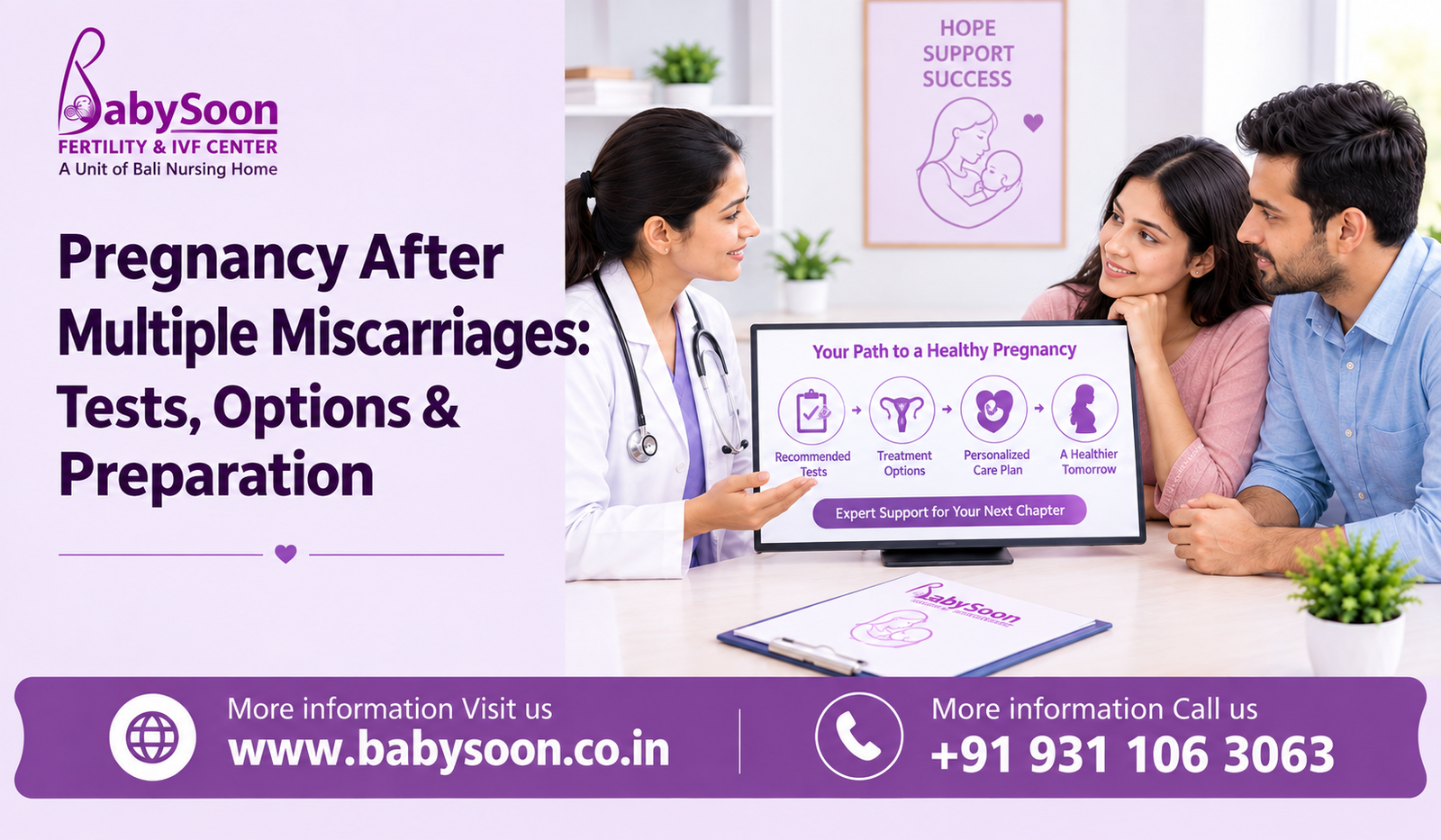
Pregnancy After Multiple Miscarriages: Tests, Options & Preparation
Experiencing a miscarriage multiple times can be very challenging. When miscarriage happens more than once, couples naturally start worrying about whether they can have a successful pregnancy or not in the future. Well, pregnancy after multiple miscarriages can still be possible and several medical options or treatments may be considered depending on the underlying cause.
Couples who are seeking fertility treatment in Delhi NCR, the right approach is not simply to try again or immediately opt for IVF. According to the BabySoon Fertility and IVF Center, a detailed fertility evaluation can help identify possible reasons for multiple miscarriages and lay out the most appropriate next step.
What Is Recurrent Pregnancy Loss
Recurrent pregnancy loss (RPL), commonly called recurrent miscarriage, refers to repeated pregnancy losses. Indian clinical guidance recognises recurrent pregnancy loss as an important reason for further evaluation rather than treating every miscarriage as an isolated event. FOGSI guidance recommends assessing factors such as antiphospholipid syndrome, genetic factors and uterine abnormalities in appropriate cases.
After multiple miscarriages, both partners may need to be evaluated. The purpose is to identify any treatable factor and understand whether natural conception, medical treatment or assisted reproductive techniques may be appropriate.
Why Do Multiple Miscarriages Happen
There can be several reasons for repeated pregnancy loss, and sometimes no definite cause is found. Possible factors include:
- Chromosomal or genetic abnormalities
- Uterine abnormalities, including certain fibroids, polyps, adhesions or a uterine septum
- Antiphospholipid syndrome (APS)
- Thyroid or other endocrine disorders
- Uncontrolled diabetes or metabolic problems
- Age-related changes in egg quality
- Certain infections or other medical conditions
- Unexplained recurrent pregnancy loss
- Male factor
What Tests Are Done After Multiple Miscarriages
If you have experienced or experiencing repeated pregnancy losses, your fertility specialist may recommend tests based on your medical history and previous pregnancy records. Common evaluations may include:
1. Detailed Medical and Pregnancy History
Your doctor may review previous pregnancy reports, ultrasound findings, gestational age at miscarriage, previous treatments and any available laboratory or pathology reports.
2. Blood Tests
Depending on your history, testing may be recommended for thyroid function, antiphospholipid antibodies and other relevant hormonal or metabolic factors.
3. Uterus Evaluation
Ultrasound, hysterosalpingography (HSG), hysteroscopy or other investigations may be used to check the structure of the uterus.
4. Genetic Evaluation
In selected cases, genetic counselling and chromosome testing of both partners may be recommended, particularly when there have been repeated losses or when there is a relevant family or pregnancy history.
5. Male Fertility Assessment
The evaluation should not focus only on the woman. Semen analysis and other investigations may be recommended when clinically appropriate.
BabySoon provides professional fertility assessment, including evaluation of both male and female reproductive health, with tests such as semen analysis, ultrasound, AMH assessment and HSG, hysteroscopy or laparoscopy, if required.
Is It Possible To Get Pregnant Naturally After Multiple Miscarriages
Yes, natural conception may still be an option for many couples.
If evaluations do not identify a condition requiring assisted reproduction, a fertility specialist in Delhi may recommend trying naturally with appropriate preconception care and early pregnancy monitoring. The decision depends on several factors, such as:
- Woman’s age
- Ovarian reserve
- Previous pregnancy history
- Number and timing of miscarriages
- Results of genetic and medical investigations
- Uterine health
- Male fertility factors
- Any existing medical conditions
There is therefore no single answer to whether a couple should try naturally, undergo treatment or proceed to IVF.
Is IVF an Option After Multiple Miscarriages
IVF after multiple miscarriages may be an option for some couples, but recurrent miscarriage does not mean that IVF Center In Delhi is always required.
IVF may be considered when recurrent pregnancy loss occurs alongside infertility, certain genetic concerns, reduced ovarian reserve, advanced maternal age or other reproductive factors. The treatment involves fertilising the egg and sperm in a laboratory and transferring an embryo into the uterus.
Genetic testing of embryos (PGT-A) may also be discussed in selected cases where there is a specific genetic indication. However, IVF should be recommended only after assessing the couple’s individual circumstances.
At BabySoon, IVF, ICSI and embryo transfer are among the assisted reproductive treatments offered to couples facing different fertility challenges.
How Should You Prepare for Pregnancy After Multiple Miscarriages
Before trying to conceive again, it is useful to discuss your pregnancy history with your fertility specialist. Your doctor may advise you to:
- Take folic acid as recommended.
- Review existing medical conditions.
- Check whether current medicines are suitable before conception.
- Maintain a healthy weight and balanced diet.
- Avoid smoking and tobacco exposure.
- Limit alcohol consumption and discuss other lifestyle factors with your doctor.
- Manage thyroid disorders, diabetes or other identified conditions.
- Complete recommended fertility and recurrent miscarriage investigations.
- Seek emotional support if previous pregnancy losses are causing significant distress.
Preconception care is particularly important because identifying and managing certain health conditions before pregnancy can help create a healthier starting point.
Choosing The Right Next Step
Multiple miscarriages can leave couples shattered but it does not mean that a healthy pregnancy is impossible. The most important step is understanding your individual situation instead of assuming that one treatment will work for everyone.
At BabySoon IVF & Fertility Centre in Delhi, couples undergo proper assessment and personalised treatment for complex fertility concerns, including recurrent pregnancy loss. Dr. Jyoti Bali’s clinical expertise includes managing recurrent miscarriages, multiple failed IVFs and complicated infertility cases throughout her professional career.
Depending on your evaluation, the next step could be natural conception with monitoring, treatment of an identified medical condition, a surgical procedure, or assisted reproductive treatment. If you have experienced multiple miscarriages, it is time to consult with a qualified fertility specialist before planning your next pregnancy. A detailed evaluation can help you understand the possible causes, available options and the safest path towards building your family.